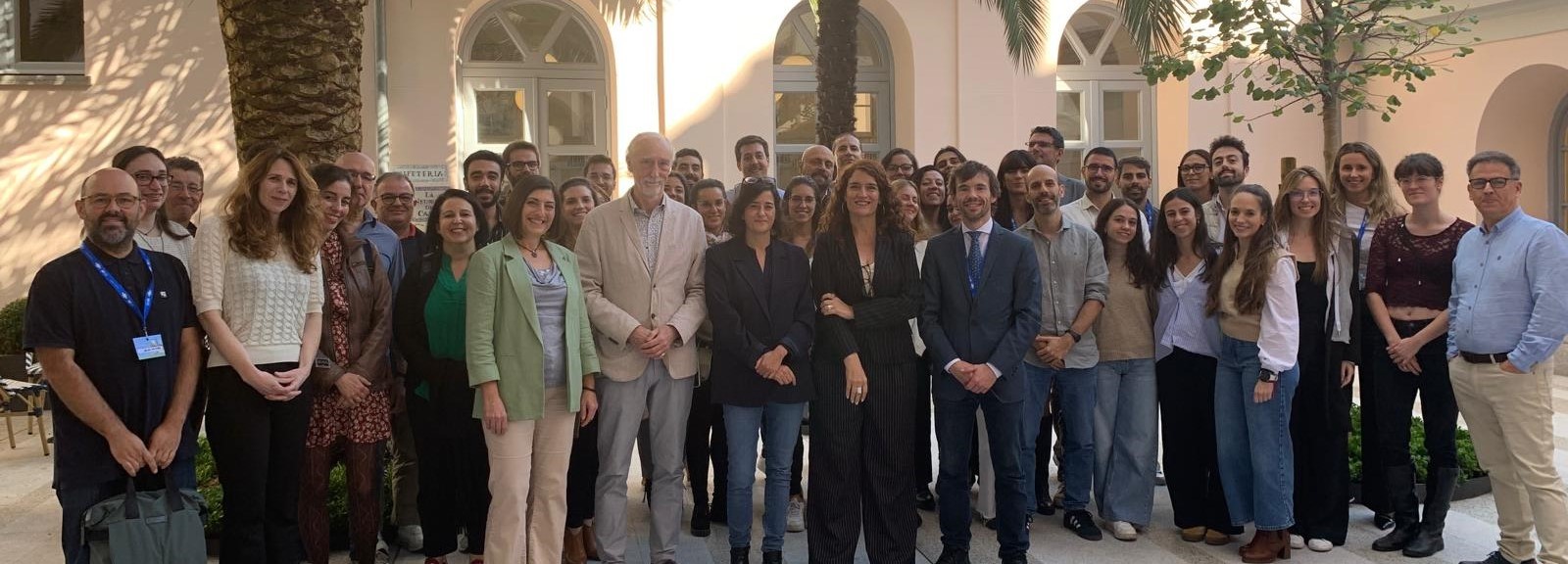
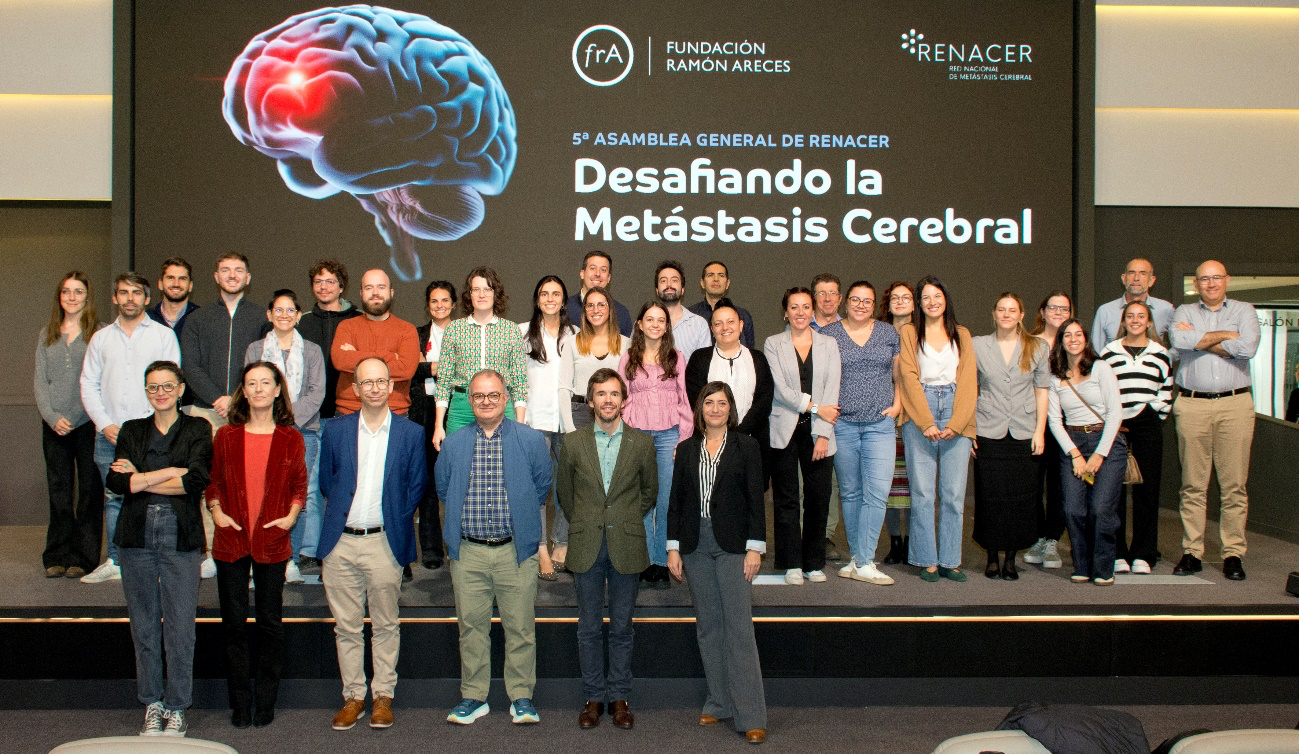
Once again, the National Brain Metastasis Network (RENACER) brought together its members and other key stakeholders interested in brain metastasis at its General Assembly held on Friday, 24 October 2025, at the headquarters of the Ramón Areces Foundation. Five years ago, this organisation sowed the seeds of the network, which now includes more than 20 hospitals and has built up a cohort of more than 500 patient cases, generating promising results that are expected to have an impact on clinical practice in the short and medium term.
The meeting established itself as a strategic space for sharing advances, identifying challenges and discussing the changes that are shaping the clinical field and research into brain metastases. Authorities and experts contributed their views from diverse and complementary perspectives, enriching the approach to this complex pathology.
The opening ceremony featured a speech by Dr Marina Pollán, director of the Carlos III Health Institute (ISCIII), who highlighted the importance of RENACER as a multidisciplinary initiative to tackle a major medical challenge. She also underscored the ISCIII’s commitment to supporting the consolidation and growth of projects that promote biomedical excellence and advance translational research aimed at improving the health of the population through science, valuing the existence of networks such as RENACER as an example of this multidisciplinary and collaborative work of excellence.
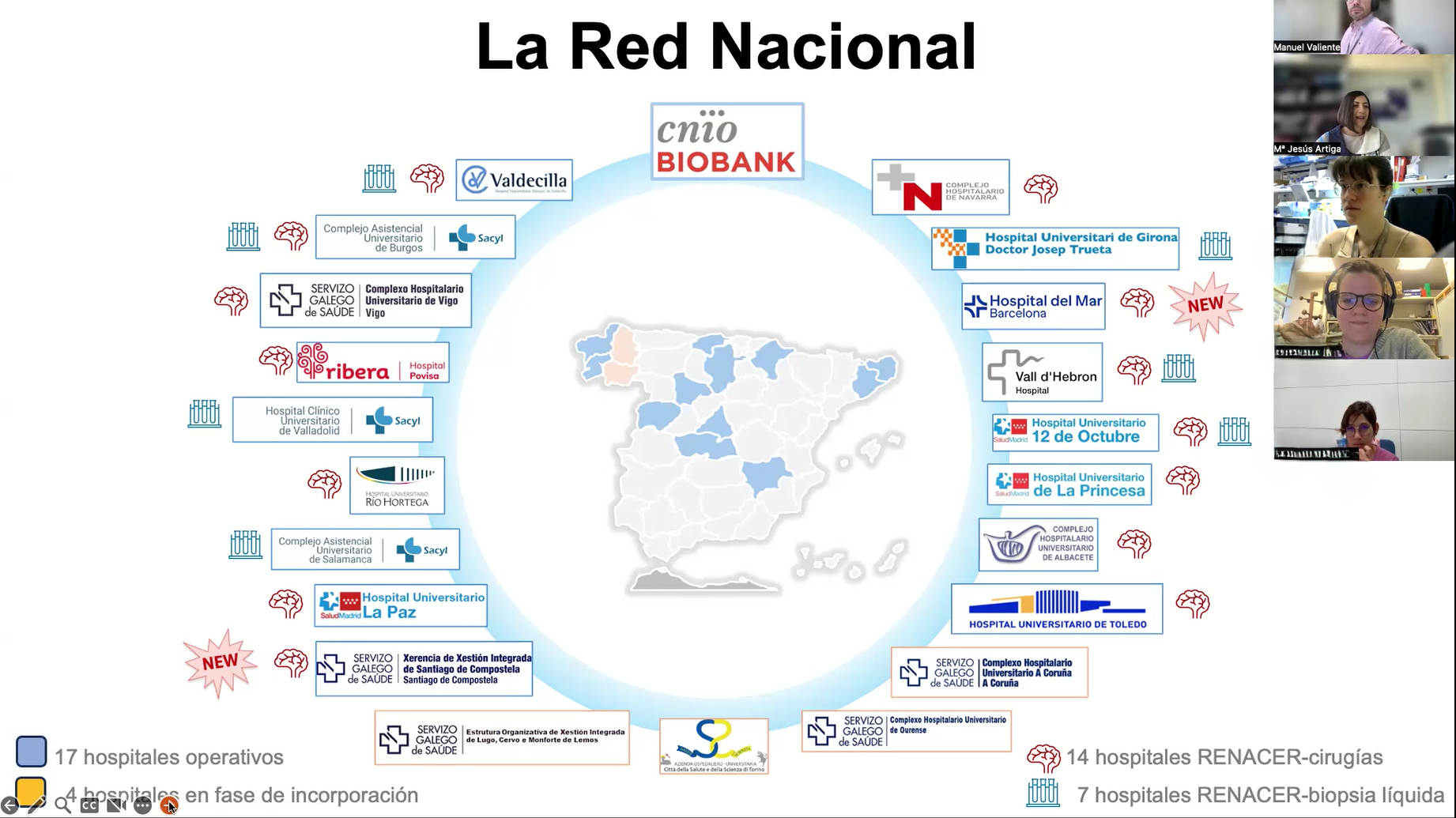
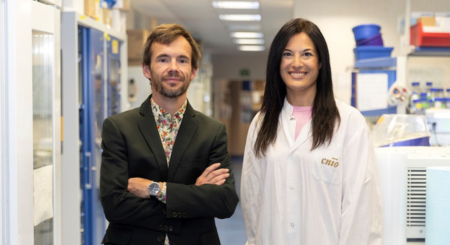
During the meeting, led by its managing director, María Jesús Artiga, and its scientific director, Manuel Valiente, an ambitious assessment of results, scientific advances and new challenges defined within the network was presented, which is expected to improve knowledge, diagnosis and clinical management of these non-primary tumours among the scientific community and society as a whole. Among some of the elements presented, the incorporation of the Hospital del Mar and the Santiago de Compostela Hospital Complex this year stood out. These have joined the network of hospitals operating in the project, helping to add to the cohort, which already includes more than 15,800 processed liquid biopsies and surgical samples, accompanied by an extensive clinical database that includes detailed information on primary tumours, metastatic lesions, treatments applied, as well as patient and lesion follow-up, to which information and omic characterisation is being added. It is being expanded to include new approaches in RENACER’s methodology and workflow, covering cognitive assessment and the incorporation of radiological follow-up through imaging. The work of harmonising, updating and implementing ontologies to make the information collected more extensive, of higher quality and interoperable, and therefore more exploitable for analysing this disease, was also highlighted.
Next, some of the technical advances in research that have been achieved within the network were shared, such as the identification of two promising therapeutic strategies: a combination of local immunosuppression with a STAT3 inhibitor, as a new mechanism towards improved immunotherapy, which was recently published; and an additional strategy involving the compound ibudilast for its anti-metastatic activity, which significantly reduced brain metastasis in experimental models by targeting a component of the microenvironment, microglial macrophages. The upcoming publication of a public data portal (cBioPortal) was also highlighted, which will share genomic data from 300 human brain metastases, thus promoting collaborative research. All this work is bearing fruit at the scientific and clinical level in other centres, such as the developments of three important researchers that are expected to have an impact on improving the categorisation of patients for treatment profiling and the development of new clinical trials in the future (based on the results of the Phase 2 randomised multicentre trial to test Silibinin in brain metastases (NCT05689619) PI: Dr Pellerino (Turin Hospital), Radioresistance biomarker. PI: Dr Pérez (H12O); and Azeliragon as a radiosensitiser (NCT05635734) PI: Dr Sepúlveda (H12O)).
The agenda also included presentations of parallel international initiatives, such as the Brainstorm programme, presented by oncologist Nuria Kotecki, which has led to a multicentre, interventional study launched in 2020 with the aim of creating a comprehensive clinical-pathological database and a biobank for research into CNS metastases, to develop predictive biomarkers and design innovative clinical trials. The programme currently has 70 centres in France, Belgium and Luxembourg. Dr Ernest Nadal, scientific director of the Catalan Institute of Oncology (ICO) and medical oncologist in its thoracic tumour unit, analysed the challenges involved in treating lung cancer patients who also develop brain metastases, which have one of the highest incidences. His presentation detailed the unique challenges and evolving therapeutic paradigms for brain metastases originating from lung cancer, highlighting the need to balance the treatment of two distinct diseases—systemic and intracranial—in the therapeutic approach to this pathology, as they often require a highly individualised and multidisciplinary approach. This approach is limited by the lack of information from clinical trials with these patients, which has resulted in a lack of high-level evidence to guide therapeutic decisions, which makes fundamental to call for more inclusive trials to be designed and specific academic studies to be conducted to address this unmet need.
The clinical debates that followed addressed as well new topics of great interest in the field. First, Dr. Sergi Benavente presented current challenges in the irradiation of brain metastases, discussing the clinical and technical challenges related to radiotherapy for brain metastases. The limitations of current treatments, the need to optimise protocols, evaluate risks/benefits, and the potential contribution of RENACER to generating evidence to define better radiotherapy strategies were discussed. As patients live longer thanks to effective systemic therapies, the management of long-term radiation toxicities, such as radionecrosis, is becoming a more pressing concern. The adoption of stereotactic radiosurgery (SRS), which is more precise and less toxic, was advocated, as was the critical need to better integrate these advanced local therapies with new systemic treatments such as immunotherapy and targeted agents.
Finally, researcher and legal expert Dr Pilar Nicolás addressed the ethical and legal challenges involved in personalised research into brain metastases: data protection, informed consent, privacy, governance, responsible use of the repository, regulatory compliance, and the importance of transparency and trust in patients. Emphasis was placed on the need for federated data networks to navigate complex international regulations such as the GDPR, enabling secure, large-scale collaboration in research. This section reinforces RENACER’s commitment to ethics in research.
A multidisciplinary force towards precision medicine
The 5th RENACER General Assembly reaffirmed its commitment to a comprehensive approach that connects clinical oncology, neuro-oncology, radiotherapy, bioethics, biobanks, and clinical and basic data analysis. The presentations agreed on the need to strengthen collaboration between disciplines, generate quality data and apply robust methodologies under ethical principles, in order to accelerate research and advance towards more accurate diagnoses and innovative treatments for brain metastases.
The recording and further information about the event can be found at the following links:
https://www.fundacionareces.es/fundacionareces/es/actividades/desafiando-la-metastasis-cerebral.html